
The Sgt. Eugene Ashley Center
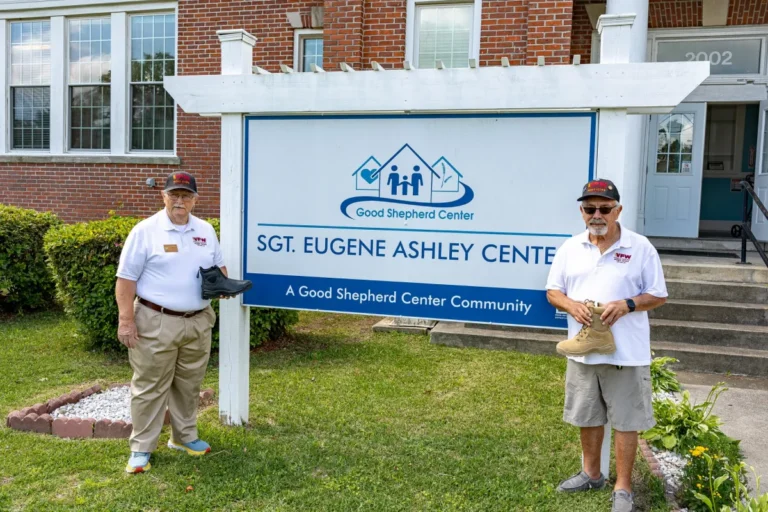
Situated within the historic Washington-Catlett School, the Sgt. Eugene Ashley Center provides short-term, transitional Bridge Housing for 16 homeless Veterans at a time. The Ashley Center was established to provide a safe haven where homeless Veterans can feel safe and secure and have their immediate needs met while working toward a plan for becoming housed again. While length of stay is determined based on individual need, our goal is to support a transition to permanent housing within about 90 days.
While at the Ashley Center, Veterans are provided food, clothing, toiletries and laundry supplies generously donated by the community. They also receive an array of supportive services from Good Shepherd staff, including transportation to and from the VA Medical Clinic, shopping, and other appointments. In the Veterans’ spare time, they have access to an on-site gym, computers, a large garden, an outdoor meditation area and multiple TV rooms.
Each Bridge Housing participant works closely with an on-site case manager to identify and address obstacles to securing rental housing. While the case manager assists in connecting Veterans with any number of needed community resources, the focus of their work together is on housing-related activities, from increasing income to applying for housing subsidy vouchers to completing a search for affordable housing. Annually, more than 90% of Bridge Housing residents make a successful transition from homelessness to permanent housing.
The Ashley Center is also where Good Shepherd Center first piloted Permanent Supportive Housing—a Best Practice Housing intervention for those with the greatest challenges to securing and maintaining housing—providing ongoing housing stability to eight chronically homeless men with significant disabilities at any one time.
Since its inception more than 25 years ago, the Ashley Center has succeeded in ending the homelessness of hundreds of Veterans.
“The Ashley Center gave me more than housing. It gave me structure, and people who understood that Veterans sometimes need help finding their way forward.”
Former Guest